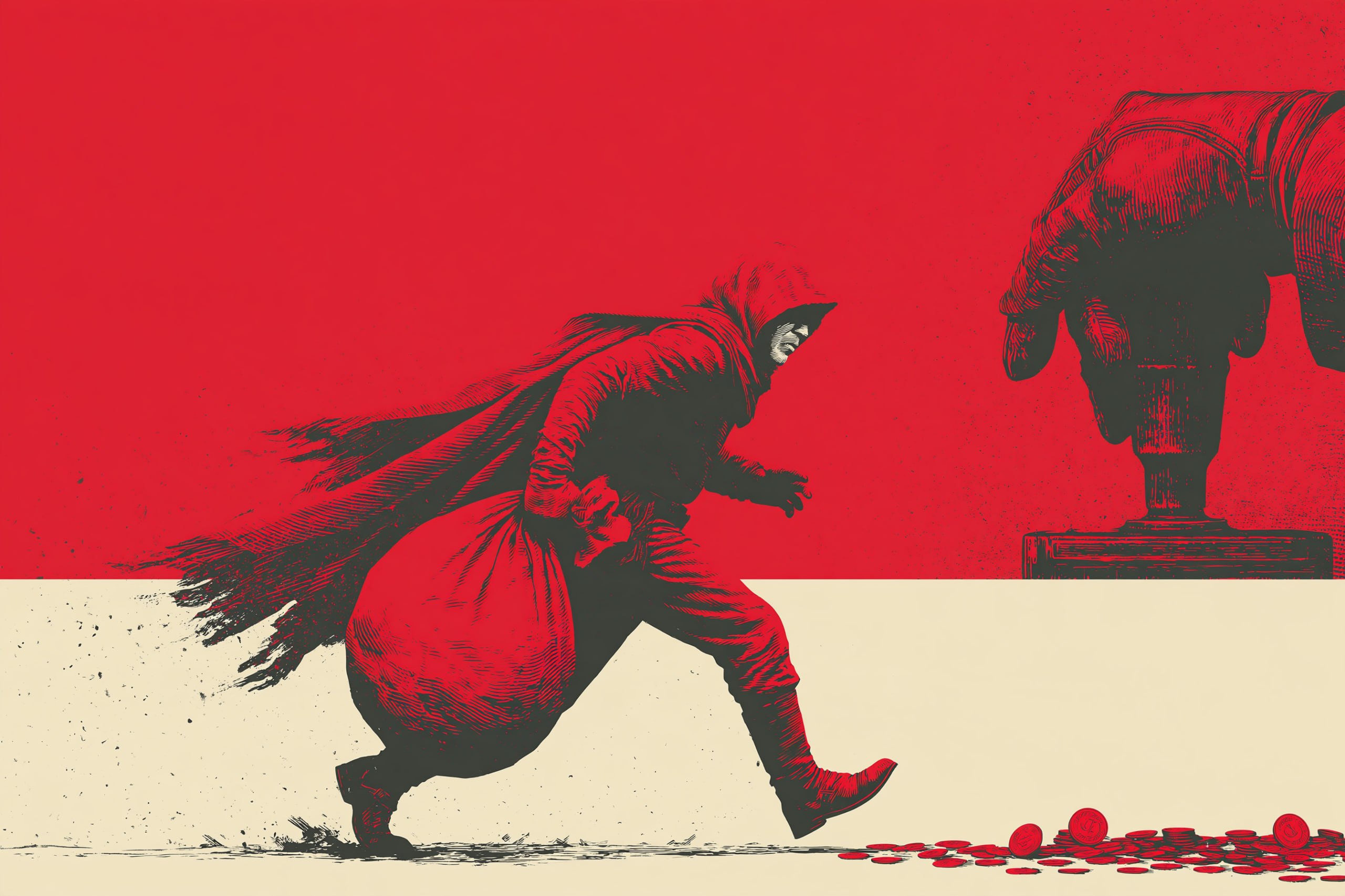
The crypto market stumbled, and cryptocurrencies closed in the red after the record $6.34 billion theft. A system designed for secure peer-to-peer settlement without intermediaries showed that assets can be frozen. As a result, the damage from the Binance hack was limited by blocks imposed by issuers and crypto exchanges. However, the full damage to Binance’s reputation and to the conceptual independence of cryptocurrencies is still to be assessed.
Market security rests on the right to freeze funds
Binance lost $6.34 billion, or 4.7% of its $134 billion in assets. The exchange and stablecoin issuers froze $3 billion, more than $2.4 billion of that by Tether and Circle. After the attackers borrowed 19.8 thousand WETH ($44.6 million) on Aave using stolen USDT as collateral, the protocol froze the markets. The exchange said it would cover the losses from the SAFU reserve fund and its own resources. In a separate case, the U.S. Treasury imposed sanctions on 10 individuals and one legal entity that helped North Korea recruit IT specialists. Chainalysis traced how one of them, Russian national Ilya Boykov, cashed out cryptocurrency linked to a North Korean hacker through the Garantex exchange.
Licensed players are taking market share
The EU Markets in Crypto-Assets Regulation (MiCA) restricted the use of USDT, and USDC overtook it in euro trading. Circle’s stablecoin share rose from 10% in January 2024 to 56%. In the U.S., the GENIUS Act will ban platforms from offering stablecoins that do not meet its requirements starting in July 2028. Tether has already launched a separate USAT for the U.S. market. The U.S. Office of the Comptroller of the Currency (OCC) has finally approved Ripple’s banking license: the federally supervised bank will manage reserves for the $2.6 billion RLUSD stablecoin. Binance has applied for a license from Brazil’s central bank and has suspended trading in 22 assets, as well as lending and margin trading, for local clients.
Corporations are entering crypto on their own terms
Public companies are defending control over their shares even when they themselves work with cryptocurrency. Thirty-three out of 62 companies, including JPMorgan, Goldman Sachs, Intel, and Alphabet, refused to tokenize their shares on OKX-ICE, a joint platform from OKX and the owner of the NYSE. The platform began trading under temporary exemptions from the U.S. Securities and Exchange Commission (SEC), and companies may prohibit tokenization of their shares within a month after the filing. According to rwa.xyz, the tokenized equities market is worth $3.8 billion. Google Cloud, part of the same Alphabet, introduced a test version of a BTC custody service for financial institutions, in which no single party has full control of the private key.