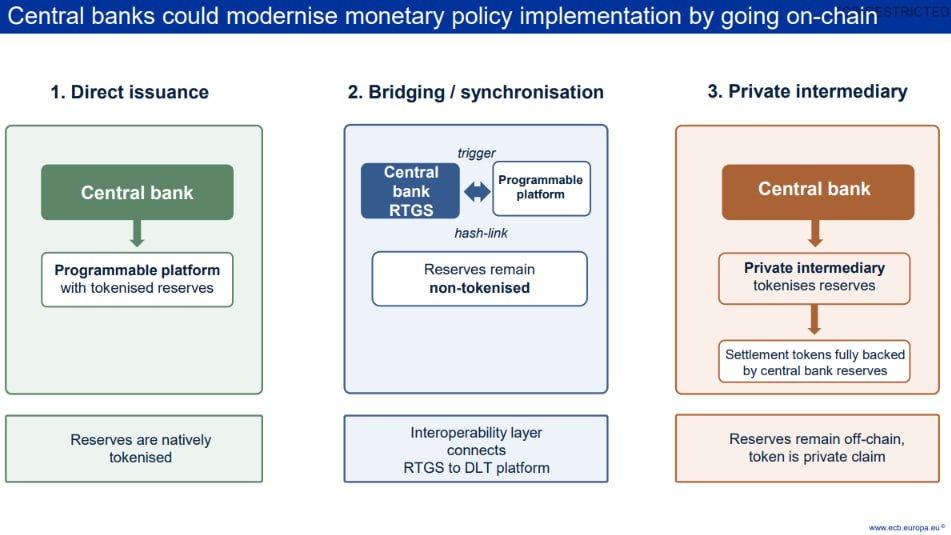
The first option assumes that the regulator will issue reserves directly on a programmable platform. An alternative proposal is to preserve the ECB’s existing real-time gross settlement system. It would then be connected to a distributed ledger technology (DLT) platform. In this scenario, the reserves themselves would not be tokenized, but the two systems would be linked.
The third approach involves tokenizing reserves held at the ECB, with the issuance of settlement tokens fully backed by them. These tokens would represent private claims, rather than claims issued directly by the ECB. The digital euro could be launched in mid-2029, subject to the adoption of the necessary legislative measures.